
The AI Accelerator Is Not Finished When the Wafer Leaves the Fab

while the system is still waiting
An artificial intelligence accelerator can leave a wafer fabrication facility and still be unavailable to a customer. The processor die may function. The memory may function. The data center may have power, cooling, and a rack waiting for installation. Yet the system can remain stuck because the parts have not passed through the complete packaging and qualification chain.
That distinction matters because the industry often talks about accelerator supply as if the wafer were the finish line. It is not. For many of the most demanding systems, the commercial product is a tightly integrated package that combines compute, high bandwidth memory, dense interconnects, thermal management, inspection, testing, and customer qualification. If any one of those gates becomes constrained, usable system output falls behind demand.
This is the packaging queue behind every AI accelerator.
Why HBM changes the manufacturing problem
High bandwidth memory, or HBM, places stacked memory close to the compute die. That architecture helps an accelerator move more data with less distance between memory and compute. Micron’s technical analysis describes HBM capacity and bandwidth as important constraints on artificial intelligence inference, especially when many workloads compete for memory at the same time.
The performance benefit creates a manufacturing consequence. HBM is not simply another memory component that can be attached at the end. It has to be stacked, connected, aligned, inspected, thermally managed, tested, and qualified as part of a larger package. As memory demand rises, the requirement for advanced packaging capacity rises with it.
This means a company can have sufficient demand for processors and still fail to deliver complete accelerators if packaging output, yield, or qualification capacity cannot keep pace.
The system map has more gates than the wafer
The chain is easier to understand as a sequence of gates.
First, memory dies are stacked into HBM packages. Those stacks must meet electrical, mechanical, and thermal requirements. Next, HBM and compute are connected through an advanced package using dense interconnects. The package is inspected for defects and measured for alignment, bumps, dimensions, and other process variables. It is then assembled, tested, and integrated into the accelerator platform.
Finally, the complete system must pass customer qualification. A package that works in a laboratory or demonstration environment is not automatically a package that can be shipped in volume. The customer needs evidence that the system performs reliably across its intended workload, operating conditions, and production process.
Every gate adds time. More importantly, every gate can create a different type of failure. A memory stack can have a yield problem. A package can have a thermal problem. A new interconnect design can require additional qualification. A test system can become a capacity bottleneck even when assembly lines are available.
The result is a chain in which the slowest qualified gate controls delivery.
Why the queue is binding now
The immediate pressure comes from the scale and intensity of artificial intelligence and high performance computing demand. TSMC management described advanced packaging capacity as extremely tight and said supply was expected to remain below demand into 2027 despite accelerated expansion plans. That is a company forecast, not independent market verification, but it is consistent with the operational structure of the problem: demand is arriving faster than qualified capacity can be added.
Packaging expansion is also slow because it requires more than floor space. New facilities need specialized tools, process control, trained labor, materials, engineering time, and customer qualification. A building can open before it produces meaningful qualified output.
Micron’s Singapore HBM advanced packaging facility illustrates the timing issue. The company announced an investment of approximately seven billion United States dollars, with meaningful advanced packaging capacity expansion beginning in 2027. That announcement signals serious supply investment, but it does not represent current output available to a customer today.
The gap between announced capacity and qualified production is where many schedules become fragile.

Capacity is not the same as usable capacity
The practical unit that operators should count is not the number of announced facilities or the theoretical number of tools. It is qualified output that can move through the complete process at an acceptable yield.
This distinction applies across the chain. Micron reported high volume HBM4 shipments for a lead customer platform and qualification samples for multiple customers. That establishes an important current capability, but it does not mean every HBM4 configuration is already in high volume production. SK hynix has described HBM4 products at different stages, including development and customer schedule alignment. A product showcase is not equivalent to repeatable volume output.
The same discipline applies to outsourced assembly and test. Amkor has announced advanced packaging and test expansion, artificial intelligence and high performance computing programs, and large capital expenditure plans. Its agreement with NVIDIA to expand United States advanced packaging and test capacity in Arizona is strategically important, but construction, timing, cost, and benefits remain forward looking.
For planning purposes, operators need to ask four separate questions. Has the facility been announced? Has the equipment been installed? Has the process reached qualified yield? Can the output be delivered repeatedly to the required customer configuration?
Only the last question describes usable capacity.
Yield turns small defects into large schedule problems
Yield is the hidden multiplier in the packaging queue. If a process produces many imperfect packages, the nominal capacity of the line overstates the number of systems that can actually ship.
Advanced packages increase the number of interfaces that must work together. HBM stacks, interposers, chiplets, bumps, substrates, thermal interfaces, and test conditions all create opportunities for variation. A small yield loss at one stage can reduce the number of complete systems available at the end of the chain.
Inspection and metrology therefore become part of capacity rather than an afterthought. Onto Innovation reported record advanced packaging revenue, exposure to two point five D and HBM processes, and backlog above one billion United States dollars. The company also announced a volume purchase agreement estimated above 240 million United States dollars with a leading HBM manufacturer for inspection and three dimensional bump metrology systems through 2027.
Those figures do not prove future revenue or shipment timing. They do show that process control equipment is being pulled into the expansion effort. When inspection demand rises alongside packaging demand, the constraint is spreading upstream into the tools needed to determine whether a package is usable.
The financial consequence is a delayed system, not just a delayed component
When packaging capacity is constrained, the consequence travels through the operating system.
A delayed package delays accelerator qualification. Delayed qualification pushes back rack integration. A delayed rack pushes back data center deployment. A delayed deployment postpones power utilization, customer revenue, and the return on infrastructure investment.
This propagation also changes capital allocation. Operators may reserve capacity earlier, fund alternative package paths, place deposits for scarce tools, or redesign systems around a different memory and interconnect configuration. Those choices can improve resilience, but they also increase engineering cost and reduce flexibility.
The risk is especially high when a project schedule is built around a facility announcement rather than qualified output. A new plant can be real, well funded, and strategically important while still failing to solve a near term delivery problem.
What capable operators are doing differently
High performing operators are mapping the complete package chain instead of treating packaging as a final procurement step. They are tracking HBM qualification, substrate availability, packaging capital expenditure, inspection and metrology backlog, yield commentary, customer prepayments, and the time between facility opening and qualified production.
They are also designing qualification evidence before the schedule becomes irreversible. If a project waits until the final package is available to discover that customer testing requires a different configuration, the queue becomes longer. Early evidence can expose thermal, reliability, or integration problems while alternatives still exist.
Technically independent optionality is another response. That does not mean duplicating every supplier. It means understanding which package architectures, memory configurations, assembly partners, and test routes can substitute for one another without creating a new qualification crisis.
The core operating principle is simple: build the schedule around qualified paths, not announced capacity.
What to watch over the next 12 to 36 months
The first scenario is partial relief. New packaging facilities and equipment begin to add qualified output, while inspection and metrology capacity expands with them. The queue remains tight, but delivery reliability improves for the largest customers with established qualification relationships.
The second scenario is persistent scarcity. Demand continues to rise faster than qualified capacity, larger packages increase process complexity, and new facilities take longer than expected to reach stable yield. In that case, packaging remains a schedule setting constraint even as wafer and memory announcements multiply.
The leading indicators are more useful than headline capacity numbers. Watch for evidence of high volume shipments, completed customer qualification, sustained yield improvement, tool installation, inspection backlog, substrate availability, and the gap between facility opening and repeatable production.
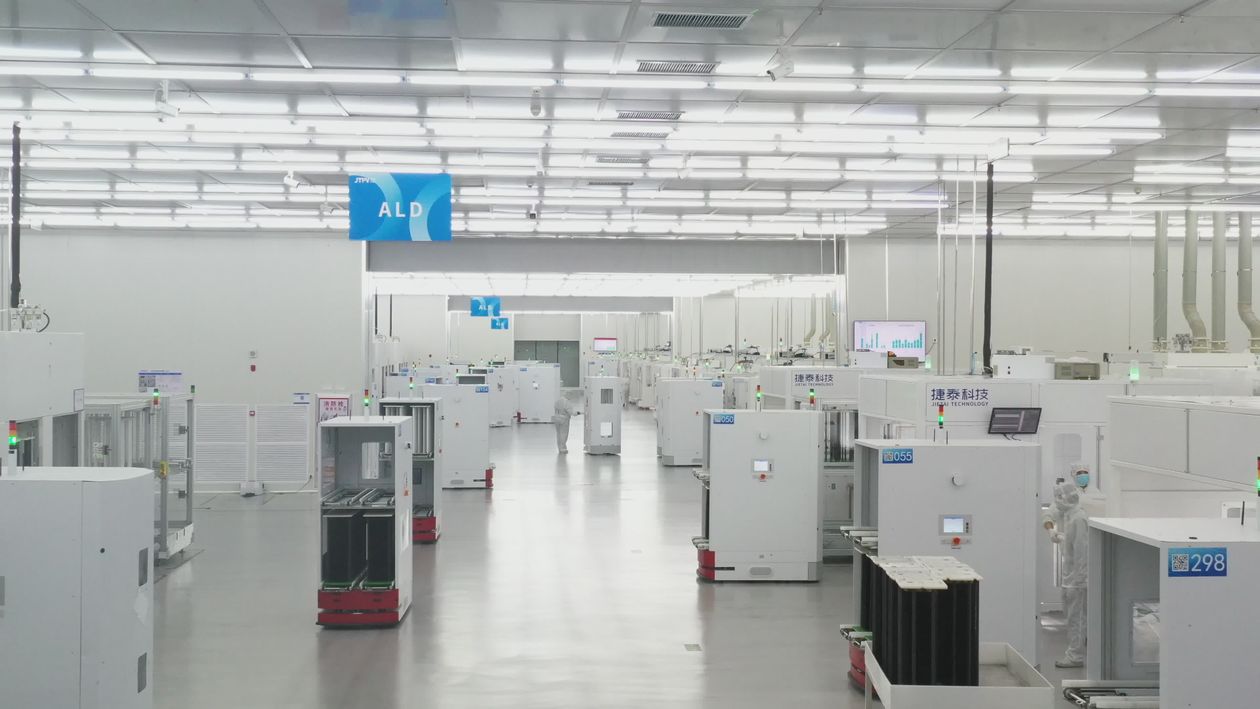
The evidence supports four United States listed companies for further research in this chain: Micron Technology, Amkor Technology, Onto Innovation, and Intel. Micron is directly exposed to HBM supply and advanced packaging expansion. Amkor is expanding outsourced advanced packaging and test. Onto provides inspection and metrology tools used to control advanced packaging processes. Intel develops packaging architectures including Foveros, EMIB, and EMIB T for chiplet and HBM integration.
These are chokepoint roles, not investment conclusions. Each company has its own execution, customer concentration, capital intensity, technology, and valuation risks.
Watchlist only. This content is for industry and market research. It is not investment research or a recommendation to buy or sell any security.
Sarga II insight
The central mistake is to treat the wafer as the product. For advanced artificial intelligence systems, the product is the qualified package and the complete system that follows it.
That changes how operators should plan. The important question is not whether enough processors have been designed or whether a new facility has been announced. The important question is whether memory, packaging, inspection, assembly, testing, and customer qualification can move together at the required yield.
When those gates do not move together, the package becomes the schedule. The companies and operators that understand that earlier will make better decisions about capacity, optionality, qualification, and capital before the queue reaches the data center.
Visit our website for more such insights.


Comments